
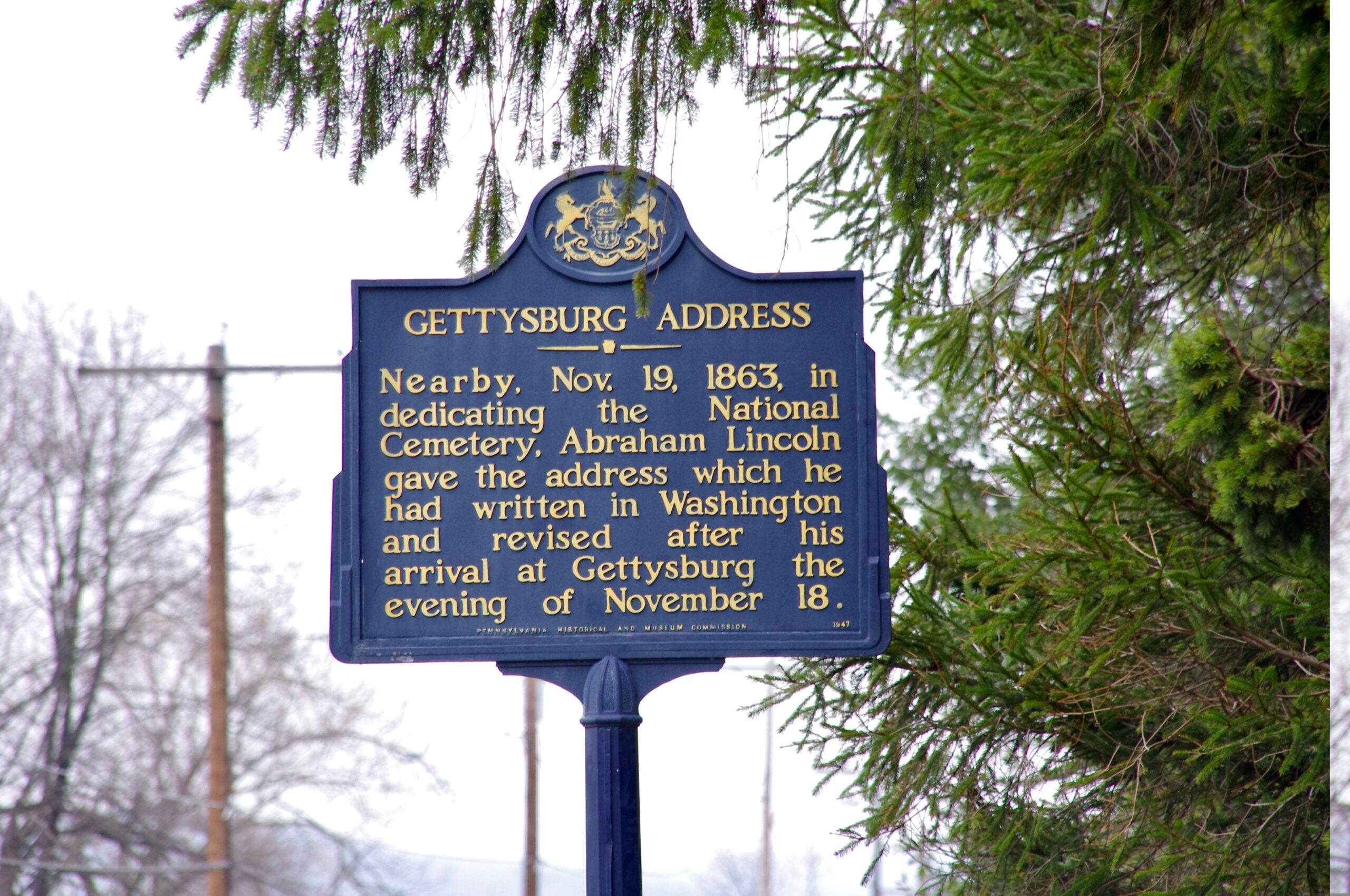
How to Memorize the Gettysburg Address: Step-by-Step Guide
As someone who has spent a lifetime making sense of sprawling historical narratives, I can assure you that even the most formidable texts can be tamed. Memorizing Lincoln’s famous 272-word speech intimidates many students and history enthusiasts. The formal language and complex sentence structure can make it seem like an impossible task. But with the right memory techniques and a consistent practice schedule, you can commit this historic address to memory more easily than you might expect. This guide breaks down proven memorization methods supported by cognitive research and classroom success stories.
Step 1: Break Down the Text and Build Context
Before attempting to memorize the address, you need to understand its structure and meaning. This foundation makes memorization significantly easier. I once spent a week trying to memorize a passage on geological strata before looking up what “strata” meant. A fool’s errand, I assure you. Once I understood the subject, the words clicked into place.
Divide into Manageable Chunks
Split the Gettysburg Address into three key sections:
- Opening (87 words): “Four score and seven years ago…” through “…dedicated to the proposition that all men are created equal.”
- Middle (82 words): “Now we are engaged in a great civil war…” through “…these honored dead we take increased devotion to that cause.”
- Closing (103 words): “It is rather for us to be here dedicated…” through “…shall not perish from the earth.”
Breaking it down makes the task less overwhelming and creates natural pauses for your memorization sessions.
Understand Meaning and Context
Clarify unfamiliar vocabulary:
- “Four score” = 80 years
- “Conceive” = create or establish
- “Proposition” = proposal or idea
- “Consecrate” = make sacred
- “Hallow” = honor or respect
The address centers on three main themes:
- The founding principles of equality and freedom
- Honoring sacrifice in the Civil War
- Preserving democracy for future generations
- Understanding these themes helps you connect emotionally with the text, creating stronger memory associations.
If you prefer a visual reference, you can download the printable lesson guide from PBS: The Address Lesson Guide (PDF).
Step 2: Identify Your Learning Style
Research shows that people learn differently, and matching memorization techniques to your natural learning style can improve results. Use these characteristics to identify your primary style:
Visual Learners
- Prefer seeing information in charts, diagrams, or written form
- Remember faces better than names
- Benefit from color-coding and highlighting
- Often close their eyes to visualize information
Auditory Learners
- Learn best by hearing information
- Remember spoken instructions well
- Often read aloud to themselves
- May talk through problems to solve them
Kinesthetic Learners
- Learn through physical activity and hands-on practice
- May fidget when sitting for long periods
- Remember information better when it involves movement
- Benefit from acting out concepts
- Take action: Free online learning style assessments like VARK can help you identify your dominant learning style.
Step 3: Create Memory Cues Based on Your Learning Style
For Visual Learners
- Memory Palace Technique: Create a mental journey through your home:
- Entryway: Picture Lincoln at your front door announcing “Four score and seven years ago…” Just try to keep him from tracking mud on the carpet.
- Living room: Visualize a battlefield in your living room for “Now we are engaged in a great civil war…”
- Kitchen: Imagine Lincoln standing on your kitchen table delivering “It is rather for us to be here dedicated…”
- Visual Mapping: Draw a flowchart connecting key phrases with simple images that represent each major point. For example, draw a birthday cake with 87 candles for “Four score and seven years ago.”
For Auditory Learners
Musical Association
- Several effective musical versions exist:
- Johnny Cash’s recitation set to music provides a rhythmic framework.
- “Gettysburg Address Rock” by Mr. Duey sets the speech to contemporary beats.
- Classical arrangements by composers like Copland connect the text to melodic patterns.
Group Recitation
Find a study partner and take turns reciting lines. This creates a call-and-response pattern that reinforces memory through repetition and active listening. You can also reinforce your auditory memory by watching professional recitations, such as this one on YouTube: Lincoln’s Gettysburg Address Recitation.
For Kinesthetic Learners
Total Physical Response (TPR)
Research confirms that connecting physical movements to text significantly improves recall. Create specific gestures:
- Point to the sky for “Four score and seven years ago”
- Sweep your hand across for “this continent”
- Make a fist for “great civil war”
- Bow slightly for “honored dead”
- Open arms wide for “government of the people, by the people, for the people”
Movement-Based Practice
Walk around a room, taking one step for each phrase or sentence. Your physical location becomes linked to specific parts of the text.
Step 4: Practice Active Recall Using Multiple Techniques
Chunking Method
- Master one paragraph completely (100% accurate).
- Add the next paragraph.
- Recite both paragraphs together.
- Continue adding paragraphs, always starting from the beginning.
- This progressive approach builds confidence and reinforces previous sections.
Digital Flashcards
Several pre-made Quizlet sets offer effective practice options:
- “Gettysburg Address by Phrases” (user: MrsHahn) breaks the speech into 30 manageable chunks.
- “Gettysburg Address Complete” (user: DrWilliamson) offers full paragraph testing.
- “Gettysburg Key Terms” (user: HistoryTeacher101) focuses on vocabulary and context.
These digital tools automatically implement spaced repetition, showing cards less frequently as you master them.
Interactive Games
Several classroom-tested games make practice more engaging:
- Line Race: With a partner, take turns reciting one sentence at a time, racing to complete your section.
- Word Cue Challenge: Have someone read the first word of each sentence as your prompt to recite the full sentence.
- Progressive Elimination: Write the full speech, then eliminate one word at a time while still reciting the complete text.
For more letter-based memorization strategies and community discussions, see this Art of Memory forum thread: Gettysburg Address: Memorizing Letters.
Step 5: Compare Memorization Approaches
Research shows two effective but contrasting approaches for tackling the Gettysburg Address:
| Approach | Benefits | Drawbacks | Best For |
| Progressive (Beginning to End) | Builds natural flowFollows logical sequenceCreates strong foundation | May leave hardest parts for when you’re tiredProgress can feel slow initially | First-time memorizersThose with longer deadlinesSequential learners |
| Difficult Section First | Tackles hardest parts when motivation is highestCreates confidence once masteredOften faster overall | Can be discouraging initiallyMay create uneven mastery | Experienced memorizersShort deadlinesThose who know which sections are hardest |
A hybrid method often works well: Start with the progressive approach for the first two paragraphs, then tackle the third (most complex) paragraph separately before integrating all three.
Step 6: Follow a Structured Practice Schedule
Right, you have your methods. Now for the most important part: a schedule. A brilliant technique without a plan is like a ship without a rudder. Spaced repetition is scientifically proven to move information from short-term to long-term memory. Below is a standard 14-day schedule with modifications for shorter or longer timeframes.
Standard 14-Day Schedule
| Day | Focus | Activity | Duration |
| 1 | First paragraph | Read, understand, first recitation | 15 min |
| 2 | First paragraph | Active recall, add gestures | 10 min |
| 3 | Second paragraph | Learn new chunk, review first | 15 min |
| 4 | Both paragraphs | Combined practice | 10 min |
| 5 | Third paragraph | Learn new chunk | 15 min |
| 6 | Full speech | Combined practice, slow recitation | 15 min |
| 7 | Full speech | Faster recitation, focus on trouble spots | 10 min |
| 8 | Rest day | Brief mental review only | 2 min |
| 9 | Full speech | Recitation with emotion | 10 min |
| 10 | Full speech | Recitation under mild distraction | 10 min |
| 11-14 | Full speech | Daily practice with increasing confidence | 5–10 min |
For 7-Day Timeline (Accelerated)
- Compress activities: Cover Days 1–2 on Day 1, Days 3–4 on Day 2, etc.
- Increase frequency: Practice twice daily (morning and evening).
- Focus on efficiency: Use flashcards during breaks and lunch periods.
- Prioritize trouble spots: Spend 60% of time on the most difficult sections.
- Record and listen: Use commute time to listen to your recordings.
For 30-Day Timeline (Extended)
- Add rest days: Practice every other day in weeks 3–4.
- Increase depth: Add historical context study on off days.
- Decrease intensity: Reduce daily practice to 5–10 minutes.
- Add variety: Alternate between different memorization techniques.
- Include review cycles: Full reviews on days 7, 14, 21, and 28.
Step 7: Test Under Real Conditions
Progressive Performance Practice
- Recite in front of a mirror.
- Record a video of yourself.
- Perform for one supportive friend or family member.
- Recite for a small group.
- This gradual exposure helps reduce performance anxiety and strengthens recall under pressure.
Handling Mistakes
When you forget a line:
- Pause and breathe.
- Visualize your memory palace.
- Use your first-letter prompts.
- Continue from a natural breakpoint if needed.
- Never show frustration, maintain composure and continue.
Step 8: Review and Maintain Long-Term Recall
Maintenance Schedule
Schedule brief “refresh” sessions:
- Weekly for the first month
- Monthly thereafter
- Before any public recitation
- A 5-minute review keeps the speech fresh in your memory.
Technique Rotation
Alternate between different review methods:
- Week 1: Visualization
- Week 2: Written practice
- Week 3: Audio recording
- Week 4: Physical gestures
This variety prevents boredom and strengthens different memory pathways.
Common Challenges and FAQs
1. What is the fastest way to memorize the Gettysburg Address?
For the quickest results, use the “difficult section first” approach. Start with the final paragraph (the most complex), master it completely, then add easier sections. This builds confidence and makes the whole process feel progressively easier. This method works best for experienced memorizers or those with very tight deadlines.
2. How can I memorize speeches quickly?
Combine multiple techniques: chunking, visualization, physical gestures, and daily spaced practice. Understanding the meaning behind the words is much more effective than rote repetition. Recording yourself and listening repeatedly also accelerates memorization.
3. What is the Gettysburg Address simplified?
In simple terms, Lincoln reminds Americans that the nation was founded on freedom and equality. He honors soldiers who died at Gettysburg fighting for these principles and calls on citizens to continue their work of preserving democracy. The brief speech shifts focus from dedicating the battlefield to rededicating America to its founding values.
4. What are the words to the Gettysburg Address?
The full Gettysburg Address text is:
“Four score and seven years ago our fathers brought forth on this continent, a new nation, conceived in Liberty, and dedicated to the proposition that all men are created equal.
Now we are engaged in a great civil war, testing whether that nation, or any nation so conceived and so dedicated, can long endure. We met on a great battle-field of that war. We have come to dedicate a portion of that field, as a final resting place for those who gave their lives that that nation might live. It is altogether fitting and proper that we should do this.
But, in a larger sense, we can not dedicate, we can not consecrate, we can not hallow this ground. The brave men, living and dead, who struggled here, have consecrated it, far above our poor power to add or detract. The world will little note, nor long remember what we say here, but it can never forget what they did here. It is for us the living, rather, to be dedicated here to the unfinished work which they who fought here have thus far so nobly advanced. It is rather for us to be here dedicated to the great task remaining before us, that from these honored dead we take increased devotion to that cause for which they gave the last full measure of devotion, that we here highly resolve that these dead shall not have died in vain, that this nation, under God, shall have a new birth of freedom, and that government of the people, by the people, for the people, shall not perish from the earth.”
Conclusion
Memorizing the Gettysburg Address is achievable with systematic practice using proven techniques. Start by understanding the text and your learning style, then apply appropriate memory techniques, follow a structured practice schedule adjusted to your timeline, and maintain your knowledge through spaced review. Whether you prefer visual mapping, musical association, or physical movement, these methods will help you master this iconic speech efficiently and effectively.