How to Memorize Amino Acid Structures: Quick Visual Tricks & Mnemonics
As someone who’s spent years helping biochemistry students, I’ve seen countless faces cloud over at the mention of memorizing the 20 amino acid structures. It’s a rite of passage, and for many, it feels like an impossible wall to climb. But let me tell you, it doesn’t have to be that way. Heading into 2025, the best methods are still a simple mix of drawing exercises, clever visual tricks, and some surprisingly effective mnemonics. These aren’t just my pet theories; memory science research and leading biochemistry textbooks confirm they work. Let’s break down how to conquer these structures without the usual frustration.
For additional tips, you can also explore the Cambridge Coaching amino acid mnemonics and the Pearson amino acid learning channel for further educational insights.
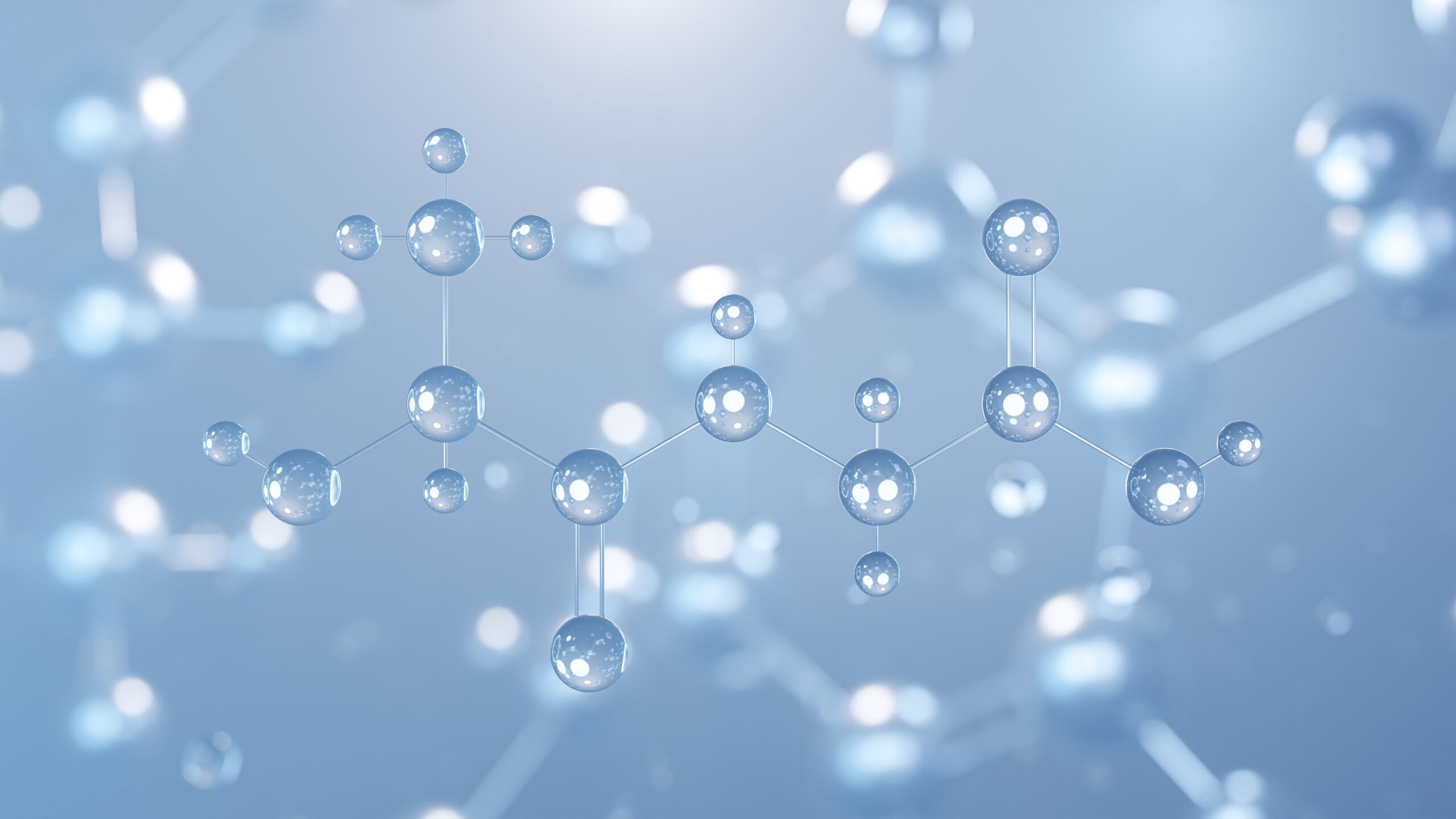
Step 1: Understand the Shared Backbone Structure
Every amino acid has the same core structure:
- A central alpha (α) carbon
- An amino group (-NH₂) attached to the α-carbon
- A carboxyl group (-COOH) attached to the α-carbon
- A hydrogen atom (H) attached to the α-carbon
- A unique R-group (side chain) attached to the α-carbon
Practice tip: I always tell my students to draw this backbone until they can do it in their sleep. Seriously, get it on a whiteboard, a napkin, anything. This common foundation is the key, as it’s identical in all 20 amino acids, only the R-group changes. If you’re a visual learner, this 5-minute video tutorial is a great way to see it assembled.
Step 2: Group Amino Acids by Their Chemical Properties
Once you have the backbone down, don’t try to memorize 20 separate molecules. That’s the scenic route to burnout. Instead, organize them into logical categories. This chunking approach lets you handle smaller, related groups, which is a much smarter way to learn.
| Classification | Mnemonic | Amino Acids | Key R-Group Features |
| Nonpolar | GAVLIMP FW (Government Agents Very Likely Investigate Major Problems For Warrants) | Glycine, Alanine, Valine, Leucine, Isoleucine, Methionine, Proline, Phenylalanine, Tryptophan | Alkyl chains, aromatic rings, thioethers |
| Polar uncharged | STCNQY (Santa’s Team Crafts Nice Quilts Yearly) | Serine, Threonine, Cysteine, Asparagine, Glutamine, Tyrosine | Hydroxyl groups, amides, thiols |
| Acidic | DE (Dangerous Enemies) | Aspartic acid, Glutamic acid | Carboxyl groups (negatively charged at pH 7) |
| Basic | KRH (Kings Rule Harshly) | Lysine, Arginine, Histidine | Amino, guanidinium, and imidazole groups (positively charged at pH 7) |
Step 3: Learn the Unique R-group Structures with Visual Tricks
Here are memorable associations for all 20 amino acid R-groups:
Nonpolar Amino Acids:
Glycine (G): R = H (simplest possible side chain, just a hydrogen)
Visual: “Ghost” amino acid with no real side chain
Alanine (A): R = CH₃ (methyl group)
Visual: A single carbon, the “A-team” has just one member
Valine (V): R = CH(CH₃)₂ (isopropyl)
Visual: V-shaped branching with two methyl groups
Leucine (L): R = CH₂CH(CH₃)₂ (isobutyl)
Visual: “Longer” version of valine with an extra carbon
Isoleucine (I): R = CH(CH₃)CH₂CH₃ (sec-butyl)
Visual: “I”somer of leucine with the branch at a different position
Methionine (M): R = CH₂CH₂SCH₃ (thioether)
Visual: The “middle” contains sulfur, M for “middle sulfur”
Proline (P): R = –(CH₂)₃– (forms ring with amino group)
Visual: The R-group circles back to form a “P-shaped” ring
Phenylalanine (F): R = CH₂C₆H₅ (benzyl)
Visual: “Phone”-alanine, a benzene ring resembles an old phone dial
Tryptophan (W): R = CH₂(indole)
Visual: Double rings look like a turkey’s display (“tryptophan in turkey”)
Polar Uncharged:
Serine (S): R = CH₂OH (hydroxymethyl)
Visual: A water drop on a swing (“serine swing”)
Threonine (T): R = CH(OH)CH₃ (hydroxyethyl)
Visual: “Three” parts, OH, CH₃, and the connection to backbone
Cysteine (C): R = CH₂SH (thiol)
Visual: A tiny hook (sulfhydryl group forms disulfide bridges)
Asparagine (N): R = CH₂CONH₂ (amide)
Visual: “N” in the name and ending with a nitrogen-containing amide
Glutamine (Q): R = CH₂CH₂CONH₂ (longer amide)
Visual: Queen has a longer amide “tail” than asparagine
Tyrosine (Y): R = CH₂C₆H₄OH (phenol)
Visual: “TYR-e” with a hydroxyl patch on the benzene “tire”
Acidic:
Aspartic acid (D): R = CH₂COOH (carboxyl)
Visual: “D” for “digestive acid” , short acid chain
Glutamic acid (E): R = CH₂CH₂COOH (longer carboxyl)
Visual: “Extended” version of aspartic acid
Basic:
Lysine (K): R = (CH₂)₄NH₂ (amino)
Visual: “K” for “key” , a long chain with a positively charged end
Arginine (R): R = (CH₂)₃NHC(NH)NH₂ (guanidinium)
Visual: Three nitrogen atoms “arguing” at the end of the chain
Histidine (H): R = CH₂(imidazole)
Visual: “His ring” , five-membered imidazole ring
Trust me, the weirder the mental image, the better it sticks. Don’t be afraid to get creative here.
Step 4: Use Step-by-Step Drawing Guides for Complex Amino Acids
For structurally complex amino acids, follow these drawing sequences:
Arginine (R):
- Draw the backbone (α-carbon with NH₂, COOH, H)
- From the α-carbon, draw a straight chain of 3 carbons (CH₂-CH₂-CH₂-)
- Add an NH group to the third carbon
- From this NH, draw a central carbon
- Add NH₂ groups on each side of this carbon
- Place a double-bonded NH above the central carbon (creating the guanidinium group)
Lysine (K):
- Draw the backbone
- From the α-carbon, draw a straight chain of 4 carbons (CH₂-CH₂-CH₂-CH₂-)
- Add an NH₂ group at the end of the chain
Histidine (H):
- Draw the backbone
- From the α-carbon, draw a CH₂ group
- Attach a pentagon (five-membered ring)
- Place nitrogens at positions 1 and 3 in the ring
- Add double bonds between C2-C3 and N1-C5
Tryptophan (W):
- Draw the backbone
- From the α-carbon, draw a CH₂ group
- Attach a six-membered benzene ring
- Fuse a five-membered ring with nitrogen at position 1
- Complete the aromatic double bonds
Proline (P):
- Draw the backbone
- From the α-carbon, draw a chain of 3 carbons (CH₂-CH₂-CH₂-)
- Connect the third carbon back to the amino nitrogen, forming a ring
- The process is always the same: start with the backbone, add the carbon chain, and finish with the functional groups and rings.
Step 5: Create Comprehensive Flashcards
Design effective flashcards with complete information:
Front side: Amino acid name or structure
Back side:
Complete structure (backbone + R-group)
One-letter code
Three-letter code
Classification (nonpolar, polar, acidic, basic)
Key properties (acidic, basic, hydrophobic, hydrophilic)
Use physical index cards or a digital platform like Anki for spaced repetition study.
Step 6: Learn the One-Letter Codes with Memory Tricks
Memorize all 20 one-letter codes using these memory aids:
| Amino Acid | 1-Letter | Memory Trick |
| Alanine | A | First letter (“A for Alanine”) |
| Arginine | R | Strong “R” sound in the name |
| Asparagine | N | “N” in asparagiNe |
| Aspartic Acid | D | From “asparDic acid” |
| Cysteine | C | First letter |
| Glutamine | Q | Sounds like “Queue-tamine” |
| Glutamic Acid | E | From “glutamic aciE” |
| Glycine | G | First letter |
| Histidine | H | First letter |
| Isoleucine | I | First letter |
| Leucine | L | First letter |
| Lysine | K | From historical “Klysine” spelling |
| Methionine | M | First letter |
| Phenylalanine | F | From “Fenylalanine” sound |
| Proline | P | First letter |
| Serine | S | First letter |
| Threonine | T | First letter |
| Tryptophan | W | From German “Wryptophan” spelling |
| Tyrosine | Y | From last syllable “tYrosine” |
| Valine | V | First letter (V-shaped side chain) |
My key piece of advice here: always write the one-letter code next to the structure every single time you practice. It connects the two in your brain.
Step 7: Understand How Structure Determines Classification
The chemical properties of each amino acid’s R-group determine its classification:
Nonpolar (hydrophobic):
- Contain primarily carbon and hydrogen atoms
- Lack polar functional groups
- Examples: alkyl chains (Ala, Val, Leu, Ile), aromatic rings (Phe, Trp), thioethers (Met)
Polar uncharged (hydrophilic):
- Contain electronegative atoms (O, N, S)
- Have hydroxyl groups (Ser, Thr), amide groups (Asn, Gln), or thiol groups (Cys)
- Can form hydrogen bonds with water
Acidic (negatively charged at pH 7):
- Contain carboxyl groups in their side chains
- Aspartic acid and glutamic acid have -COOH groups that lose H⁺ at physiological pH
- Result in a -COO⁻ negative charge
Basic (positively charged at pH 7):
- Contain nitrogen-rich groups that can accept H⁺
- Lysine (amino group), arginine (guanidinium group), histidine (imidazole ring)
- Gain H⁺ at physiological pH to form positive charges
Understanding these structural features is about more than just passing the test; it helps you predict how an amino acid will behave inside a protein.
Step 8: Test Yourself Regularly with Varied Methods
Put your knowledge into practice:
- Draw structures from memory, then check against references
- Use online quizzes specifically for amino acid structures
- Create Anki decks with spaced repetition
- Set a timer and see how many structures you can draw in 5 minutes
- Try teaching the structures to someone else
- Regular self-testing is how you find your weak spots and build real confidence before an exam.
Step 9: Use Spaced Repetition for Long-Term Retention
Consistent review beats cramming:
- Review amino acids daily for 10–15 minutes
- Follow a spaced repetition schedule: day 1, day 3, day 7, day 14, then monthly
- Mix drawing structures with flashcard review
- A great little hack is to study right before bed to help with memory consolidation during sleep
For a detailed guide on integrating spaced repetition, check out this open-access resource. This proven method helps move information into your long-term memory.
Conclusion
Learning all 20 amino acid structures feels like a huge task, but it’s achievable with a smart approach that combines visual tricks, logical groups, and steady practice. By mastering the common backbone, using funny visuals for the R-groups, and practicing with spaced repetition, you can get there. Remember, every biochemist you know had to learn these from scratch, too, they just used effective strategies like these. Consistent, active practice will make these structures second nature, setting you up for success in more advanced biochemistry and on exams like the MCAT.
FAQs
1. What is the easiest way to memorize amino acids?
The easiest approach combines drawing the shared backbone while using classification mnemonics to group similar amino acids. Chunking them into categories (nonpolar, polar, acidic/basic, aromatic) makes the task more manageable and helps you understand their biological functions, too.
2. How do you memorize amino acid letters?
Connect one-letter codes to the amino acid name using memory hooks (like F for Phenylalanine because it starts with an F sound). For non-intuitive codes, create specific mnemonics (like Q for Glutamine, thinking “queue-tamine”). Always practice writing the code alongside the structure.
3. What is the short form to remember the amino acids?
Classification mnemonics like GAVLIMP FW for nonpolar amino acids, STCNQY for polar uncharged, DE for acidic amino acids, and KRH for basic amino acids provide effective short forms. These groupings help you organize all 20 amino acids into manageable chunks.
4. Do you need to memorize amino acid structures for the MCAT?
Yes, you need to know the structures of all 20 common amino acids for the MCAT. The exam typically asks about amino acid properties, side chain interactions, and how structure relates to function in proteins. Focus especially on unique properties like acidic/basic behavior and hydrophobicity.