
How to Memorize Erikson’s Stages: Mnemonics & Visual Aids
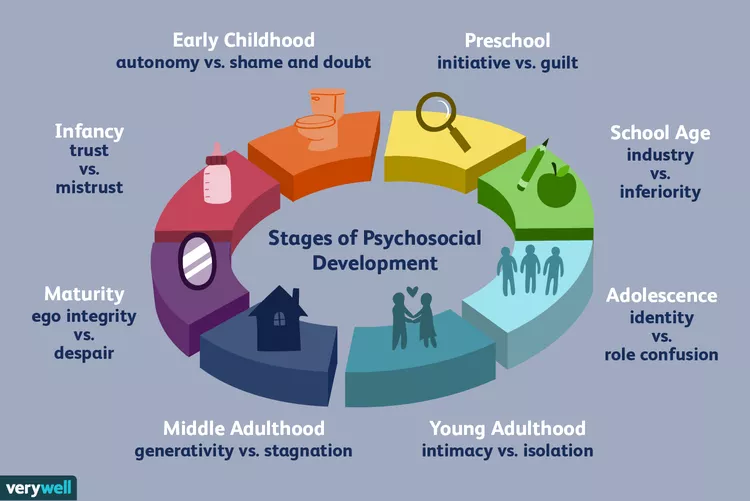
As someone who has spent decades teaching psychology, I have seen countless students’ eyes glaze over at the thought of memorizing Erikson’s eight stages of psychosocial development. Remembering them, especially under pressure during exams, can be a real challenge. For a concise overview of Erikson’s original theory, this Verywell Mind article provides good context.
Fortunately, some classic memory techniques can make this information much easier to recall. These tricks are just as effective in 2025 as they were when I was a student. Mixing up your methods, using visuals, words, and stories, is proven to be far more effective than just repeating the stages over and over. They will make the stages of development easier to remember.
| Stage # | Age Group | Developmental Stage | Psychosocial Conflict | Mnemonic Object | Key Development |
| 1 | Infancy (0-18 months) | Basic Trust | Trust vs. Mistrust | Bun/Sun | Learning that needs will be consistently met |
| 2 | Toddlerhood (18 months–3 years) | Autonomy | Autonomy vs. Shame & Doubt | Shoe/Zoo | Developing independence and self-control |
| 3 | Early Childhood (3–5 years) | Initiative | Initiative vs. Guilt | Tree/Bee | Taking initiative in activities and play |
| 4 | School Age (5–12 years) | Industry | Industry vs. Inferiority | Door/Store | Building competence and skills |
| 5 | Adolescence (12–18 years) | Identity | Identity vs. Role Confusion | Hive/Drive | Discovering personal identity |
| 6 | Young Adulthood (18–40 years) | Intimacy | Intimacy vs. Isolation | Sticks/Mix | Forming deep relationships |
| 7 | Middle Adulthood (40–65 years) | Generativity | Generativity vs. Stagnation | Heaven/Oven | Contributing to society and future generations |
| 8 | Late Adulthood (65+ years) | Integrity | Integrity vs. Despair | Gate | Reflecting on life with satisfaction or regret |

Step 1: Create Rhyme-Based Associations for Each Stage
Pairing each stage with a rhyming object creates a strong memory hook. Try to visualize these pairings:
- Bun/Sun: Trust vs. Mistrust (Infancy, 0–18 months): Picture an infant reaching for a warm bun, symbolizing the trust that their needs will be met.
- Shoe/Zoo: Autonomy vs. Shame & Doubt (Toddlerhood, 18 months–3 years): Imagine a toddler proudly saying “I do it myself!” while putting on shoes.
- Tree/Bee: Initiative vs. Guilt (Early Childhood, 3–5 years): See a preschooler taking initiative to organize a game under a tree.
- Door/Store: Industry vs. Inferiority (School Age, 5–12 years): Envision a child building something useful, showcasing their growing skills.
- Hive/Drive: Identity vs. Role Confusion (Adolescence, 12–18 years): Think of a teenager exploring different groups and activities to find where they belong.
- Sticks/Mix: Intimacy vs. Isolation (Young Adulthood, 18–40 years): Young adults forming deep connections, like sticks bound together.
- Heaven/Oven” Generativity vs. Stagnation (Middle Adulthood, 40–65 years): Middle-aged adults “cooking up” contributions for future generations.
- Gate: Integrity vs. Despair (Late Adulthood, 65+ years): Elders reflecting on life’s journey as they stand by a gate, looking back.
Real-World Scenarios for Each Stage
These brief stories help anchor each stage in concrete situations:
- Trust vs. Mistrust: A baby cries at night; their parent quickly responds, feeds, and soothes them. The baby learns their needs will be consistently met, building trust.
- Autonomy vs. Shame & Doubt: A toddler insists on putting on their own coat despite struggles with the zipper, declaring “I do it!” When finally successful, their proud smile shows developing autonomy.
- Initiative vs. Guilt: A 4-year-old organizes a pretend restaurant in the living room, assigning roles to family members and directing the play. Supportive responses encourage initiative.
- Industry vs. Inferiority: An elementary student works diligently on a science project, receives encouraging feedback from their teacher, and feels capable when presenting to classmates.
- Identity vs. Role Confusion: A teenager tries debate club, then art class, then volunteers at an animal shelter, exploring different interests to discover who they truly are.
- Intimacy vs. Isolation: A young adult shares vulnerabilities with a close friend, building mutual trust and deepening their relationship rather than keeping others at a distance.
- Generativity vs. Stagnation: A middle-aged parent volunteers as a youth mentor, finding fulfillment in guiding the next generation rather than focusing solely on personal concerns.
- Integrity vs. Despair: A grandmother shares life stories with her grandchildren, feeling satisfaction about the choices she made and the legacy she leaves behind.
Step 2: Build an Acronym Sentence Linking All Eight Conflicts
Take the first letter of each main concept (T-A-I-I-I-I-G-I) and create a sentence. This is where you can get a little silly. The more absurd the sentence, the better you’ll remember it.
“Trusty Ants Initiate Industrious Ideas In Generous Individuals”
“Trust autonomy to initiate industry, identify intimacy and generate integrity”
Feel free to customize your acronym sentence with words that you find personally meaningful.
Step 3: Chunk Stages by Developmental Period
Breaking the eight stages into groups makes it less of a memory hog and more manageable.
- Childhood (Stages 1–4): Trust, Autonomy, Initiative, Industry
- Teen & Young Adult (Stages 5–6): Identity, Intimacy
- Adulthood & Beyond (Stages 7–8): Generativity, Integrity
Practice each chunk until it is solid, then link them together in sequence.
Step 4: Link Stages in a Visual Story Chain
Now, let’s direct a short film in your mind. Create a mental movie connecting all eight objects in a coherent story. You might even sketch these scenes to reinforce the visual memory:
- Baby contentedly holding a bun (Trust)
- Toddler proudly tying their shoe (Autonomy)
- Child climbing a tree with confidence (Initiative)
- School child crafting a wooden door (Industry)
- Teenager finding their hive of friends (Identity)
- Young adults connecting sticks together (Intimacy)
- Adult sending positive contributions to heaven (Generativity)
- Elder reflecting peacefully at a gate (Integrity)
- Add personal details to make your story unique and memorable.
Step 5: Reinforce Learning with Flashcards and Self-Testing
Use these quick-fire techniques to make the information stick:
- Create digital or paper flashcards with mnemonic objects on one side and the stage/conflict on the other. For digital flashcards, consider using Anki or Quizlet.
- Quiz yourself by going through the stages both forwards and backwards.
- Practice recalling the stages in random order.
- Explain each stage to someone else, or record yourself describing them.
- Set daily 5-minute review sessions for maximum retention.
Quick Reference Table
| Stage # | Age Group | Conflict | Mnemonic Object |
| 1 | Infancy (0–18 months) | Trust vs. Mistrust | Bun/Sun |
| 2 | Toddlerhood (18 months–3 years) | Autonomy vs. Shame & Doubt | Shoe/Zoo |
| 3 | Preschool (3–5 years) | Initiative vs. Guilt | Tree/Bee |
| 4 | School Age (5–12 years) | Industry vs. Inferiority | Door/Store |
| 5 | Adolescence (12–18 years) | Identity vs. Role Confusion | Hive/Drive |
| 6 | Young Adulthood (18–40 years) | Intimacy vs. Isolation | Sticks/Mix |
| 7 | Middle Adulthood (40–65 years) | Generativity vs. Stagnation | Heaven/Oven |
| 8 | Late Adulthood (65+ years) | Integrity vs. Despair | Gate |
Common Points of Confusion and How to Address Them
Distinguishing Between Initiative vs. Guilt and Industry vs. Inferiority
I can’t tell you how many exam papers I’ve graded where students mix these two up. Here is the key difference:
- Initiative vs. Guilt (Preschool, 3–5 years): Focuses on starting activities and exploring through play. The key question is “Can I do things?” Think of children initiating pretend play.
- Industry vs. Inferiority (School age, 5–12 years): Focuses on completing tasks and developing competence. The key question is “Can I make things and succeed?” Think of children working on school projects.
- Memory Tip: Initiative is about I starting things. Industry is about being into completing things. Also, “I” comes before “In” in the alphabet, just as Initiative comes before Industry developmentally.
Distinguishing Between Identity vs. Role Confusion and Intimacy vs. Isolation
This is another common point of confusion:
- Identity vs. Role Confusion (Adolescence, 12–18 years): Focuses on defining who you are. Teens ask “Who am I?” as they explore different roles and beliefs.
- Intimacy vs. Isolation (Young Adulthood, 18–40 years): Focuses on forming deep connections with others. Young adults ask “Can I love and be loved?”
- Memory Tip: You need to know yourself (Identity) before you can truly connect with others (Intimacy). “ID” (Identity) comes before “IN” (Intimacy) alphabetically and developmentally.
Effectiveness of Different Mnemonic Techniques by Learning Style
Different memorization methods work better for different types of learners:
Visual Learners
- Most Effective: Visual story chains and image-based mnemonics.
- Why It Works: Visual learners process information best through pictures and spatial relationships.
- Pro-Tip: Draw your own images connecting the stages or create a mind map showing how they flow together.
Auditory Learners
- Most Effective: Rhyme-based associations and spoken acronym sentences.
- Why It Works: Auditory learners remember what they hear, especially when it has rhythm or pattern.
- Pro-Tip: Record yourself reciting the stages with their conflicts and listen repeatedly.
Kinesthetic Learners
- Most Effective: Story chains with physical movement or gestures.
- Why It Works: Kinesthetic learners remember through movement and physical sensation.
- Pro-Tip: Create hand gestures for each stage, or physically act out the story chain.
Several YouTube videos offer songs and rhythmic chants to help memorize Erikson’s stages. For example, this YouTube mnemonic song video pairs each stage with a catchy tune.
Common Questions
1. What if I still mix up the order under stress?
Take a deep breath and combine methods, visualize the rhyming objects in order while reciting your acronym sentence. This dual approach activates multiple memory pathways.
2. Can I adapt these mnemonics for clinical notes?
Absolutely. Draw tiny object icons (bun, shoe, tree, etc.) in the margins of your notes as visual cues for each developmental stage you are seeing in clients.
3. Is it worth drawing my own images?
Yes, research shows that self-created visuals improve recall. The act of drawing engages motor memory and personal meaning.
4. What apps work best for flashcards?
Anki and Quizlet are popular free options with spaced repetition features. Set daily practice reminders and use their mobile apps for quick review sessions.
5. How to memorize Erikson’s 8 stages of development?
Use mnemonic devices like the rhyming objects method (bun, shoe, tree, etc.), create acronyms, or build a visual story connecting all stages. Chunking them into childhood, adolescence, and adulthood groups also helps.
6. How to reference Erikson’s stages of development?
Reference Erikson’s work by citing his original books, Identity and the Life Cycle (1959) or Childhood and Society (1950). In your writing, include the stage number, age range, and psychosocial conflict.
7. What are the 8 stages of Erikson’s stages of development?
Erikson’s eight stages are: Trust vs. Mistrust (infancy), Autonomy vs. Shame/Doubt (toddlerhood), Initiative vs. Guilt (preschool), Industry vs. Inferiority (school age), Identity vs. Role Confusion (adolescence), Intimacy vs. Isolation (young adult), Generativity vs. Stagnation (middle adult), and Integrity vs. Despair (late adult).
8. What is the 7th stage of Erikson?
The 7th stage is Generativity vs. Stagnation, occurring in middle adulthood (approximately 40–65 years). It involves contributing to society and future generations through work, family, and community, versus feeling a sense of inactivity.
Additional Resources
For further reading on Erikson’s stages, consider these useful resources:
StatPearls article on Erikson’s Stages
Erik Erikson Official Page at Erikson Institute
Wikipedia: Erikson’s Stages of Psychosocial Development
These memory techniques work because they transform abstract concepts into concrete, connected images that your brain can easily retrieve. Choose one method today, practice for just five minutes, and you will notice how quickly your recall improves.
Share these techniques with classmates or colleagues. Teaching others will further cement these stages in your own memory while helping your peers succeed too.