How to Memorize US States and Capitals: Proven Techniques 2025
Struggling to remember all 50 US states and their capitals? You’re not alone. I’m Barb Rosenberg, and as a geography educator, I’ve seen this trip up countless students. Whether you’re preparing for an exam, trying to win at trivia night, or planning a cross-country road trip, this geographic knowledge often escapes us at crucial moments. Many people give up after memorizing a handful, finding the task overwhelming or boring.
But mastering this information doesn’t have to be a chore. Research shows that with the right memory techniques, you can learn all 50 state-capital pairs efficiently and retain them long-term. According to cognitive scientists, combining multiple memory methods increases retention by up to 70% compared to traditional rote memorization.
| Memory Technique | Key Benefits | Best For | Time Investment |
| Mnemonics | Creates memorable associations | Difficult state-capital pairs | Medium |
| Memory Palace | Uses spatial memory | Regional groupings | High initial, low maintenance |
| Map Labeling | Reinforces visual-geographic connections | Spatial learners | Medium |
| Story Linking | Uses narrative memory | Regional clusters | Medium |
| Songs & Rhymes | Embeds information through melody | Auditory learners | Low |
| Chunking & Acronyms | Reduces the mental workload | Breaking down the task | Low |
| Apps & Flashcards | Provides spaced repetition | Regular practice | Medium |
| Spaced Repetition | Optimizes review timing | Long-term retention | Low but consistent |
1. Use Mnemonic Devices to Link US States and Capitals
Mnemonics create memorable connections between information through vivid associations. Your brain remembers unusual, funny, or bizarre images far better than plain facts. I’ve always found that the weirder the mnemonic, the better it sticks.
To create effective mnemonics:
- Make associations personal and meaningful to you
- Use vivid imagery that engages multiple senses
- Create connections that are humorous or unusual
Examples for Commonly Confused Capitals:
| State | Capital | Mnemonic |
| Vermont | Montpelier | Picture a mountain (“Mont”) piled with pelicans (Mont-PEL-ier) in the green forests of Vermont |
| South Dakota | Pierre | Visualize a peer (homophone “Pierre”) standing on the vast Dakota prairie |
| Maine | Augusta | Imagine a lobster (for Maine) with an August sun above it |
| Kentucky | Frankfort | Think of Benjamin Franklin eating fort-ified fried chicken in Kentucky |
| Missouri | Jefferson City | Picture Thomas Jefferson sitting in the “Show-Me” state (Missouri) |
| Montana | Helena | A woman named Helena hiking up a Montana mountain |
| North Dakota | Bismarck | Imagine a Bismarck sausage in a cold Dakota snowstorm |
| West Virginia | Charleston | Imagine a Charleston dance party in the West Virginia mountains |
| Alaska | Juneau | Ask “Alaska, do you know (Juneau) the capital?” |
| Oregon | Salem | Ask, “Are you going sailing (Salem) in Oregon?” |
Additional Memorable Mnemonics:
| State | Capital | Mnemonic |
| Alabama | Montgomery | “Alabama (AL) has a MOUNTAIN of GOMERy (Montgomery)” |
| Arizona | Phoenix | “The Arizona desert is so hot that phoenixes rise from the ashes” |
| California | Sacramento | “California’s sacred mentality (Sacramento)” |
| Colorado | Denver | “Colorado’s mountains are so high they DENt VERy easily” |
| Florida | Tallahassee | “Florida is so TALL that its HAT SEES the sun , Tallahassee” |
| Georgia | Atlanta | “Georgia always LANDS her AUNT at the airport , Atlanta” |
| Ohio | Columbus | “OH, HI, Mr. COLUMBUS!” |
| Texas | Austin | “At the dentist in a TAXI, you say AHHH and he fills your teeth with TIN” |
2. Build a Memory Palace for Spatial Recall of States and Capitals
Memory palaces use your brain’s natural ability to remember places. By placing information in familiar locations, recall becomes almost automatic.
Steps to Create an Effective Memory Palace:
- Choose a familiar location (your home, school, or workplace)
- Draw or sketch the floor plan to solidify its structure
- Create a specific route through this place with distinct stopping points
- Mentally place vivid images of each state and its capital at these points
- Make the images interact with the location in memorable ways
- Practice walking through your memory palace regularly
For best results, limit each memory palace to 10–15 states and create multiple “buildings” organized by region. These structures can help you learn the 50 states in about 20 minutes by grouping and visualizing sets.
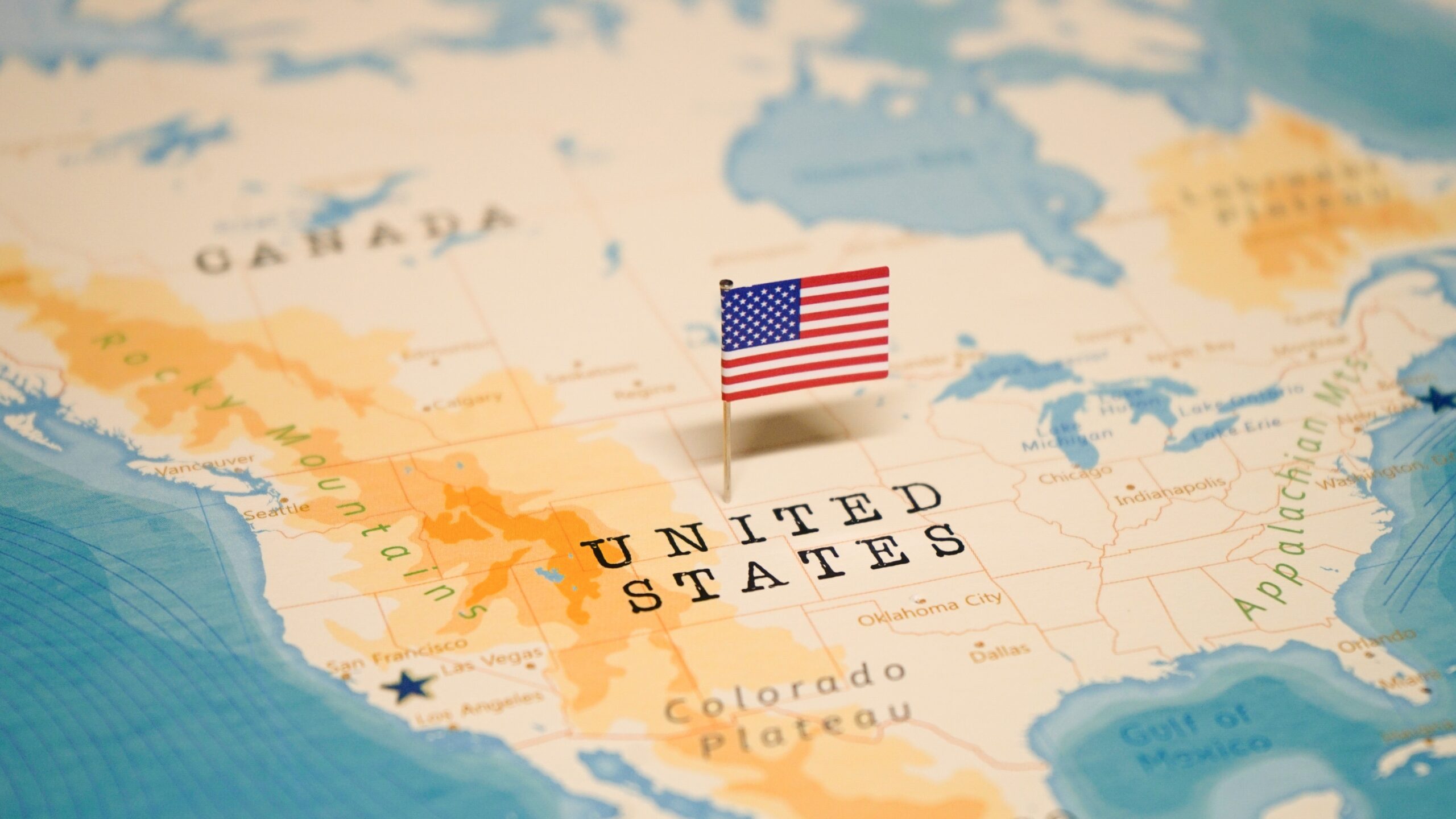
3. Label a Blank US Map for Visual and Geographic Memory
- Map-based learning reinforces both factual knowledge and spatial understanding.
- Print or draw a blank US map weekly
- Start by labeling states you already know
- Add 5 new states and their capitals each practice session
- Color-code regions to group information visually
- Trace state borders with your finger while saying the state and capital aloud
This approach combines sight, touch, and hearing, creating stronger memory connections. According to memory research, turning a mental task into a hands-on activity greatly improves retention.
4. Craft Simple Stories to Connect Regional Clusters
If building a palace in your mind sounds like too much construction, let’s try storytelling instead. Our brains are hardwired to remember narratives better than isolated facts. Creating stories that link states within regions uses this natural tendency.
- Northeast Story: NEW YORK’s ALBANY players were in CONCORD (New Hampshire) when they met BOSTON players (Massachusetts) who were in PROVIDENCE (Rhode Island) eating HARTFORD (Connecticut) grinders.
- Midwest Story: COLUMBUS (Ohio) visited LANSING (Michigan) to see INDIANAPOLIS (Indiana) race cars that SPRINGFIELD (Illinois) mechanics built. They later stopped in MADISON (Wisconsin) and ST. PAUL (Minnesota) before heading to DES MOINES (Iowa).
- South Story: ATLANTA (Georgia) peaches traveled to MONTGOMERY (Alabama) where JACKSON (Mississippi) and BATON ROUGE (Louisiana) chefs made pies. NASHVILLE (Tennessee) musicians provided entertainment while TALLAHASSEE (Florida) dancers performed.
- West Story: DENVER (Colorado) skiers flew to SALT LAKE CITY (Utah), then drove to PHOENIX (Arizona) and SANTA FE (New Mexico) for vacation. They later visited SALEM (Oregon) and OLYMPIA (Washington) before ending in HONOLULU (Hawaii).
Stories and regional narratives make learning fun and effective because they use our brain’s natural preference for narrative information.
5. Master Commonly Confused State-Capital Pairs
Some state-capital pairs are notoriously difficult to remember, often because the capital isn’t the state’s largest or most famous city. New York, New York is a wonderful town, but it’s not the capital. Here are targeted strategies for the most challenging pairs:
Top 10 Most Confused State-Capital Pairs:
- Vermont (Montpelier) – Not Burlington
- South Dakota (Pierre) – Not Sioux Falls
- Maine (Augusta) – Not Portland
- Kentucky (Frankfort) – Not Louisville
- Missouri (Jefferson City) – Not St. Louis
- Montana (Helena) – Not Billings
- North Dakota (Bismarck) – Not Fargo
- New York (Albany) – Not New York City
- Illinois (Springfield) – Not Chicago
- Pennsylvania (Harrisburg) – Not Philadelphia or Pittsburgh
Memory Trick: Create a mental image of the capital doing something impossible in the state. The more unusual, the better you’ll remember it. For example: Picture tiny Montpelier (population ~8,000) somehow containing all of Vermont inside it.
6. Sing Songs and Rhymes to Memorize State Capitals
Music helps information stick in your memory through rhythm, melody, and repetition. The musical part of your brain forms connections that make recall almost automatic.
2025 Musical Resources Compared:
| Resource | Format | Key Features | Cost |
| “Fifty Nifty United States” (2025 Remix) | YouTube video | • Alphabetical order • Clear vocals • Catchy melody • Animated map visuals | Free |
| “States & Capitals Rap Battle” | App with audio | • Regional groupings • Modern hip-hop style • Interactive quizzes • Pronunciation guide | $3.99 |
| “Capital City Flow” | Spotify playlist | • Individual songs for each region • Contemporary beats • Call and response format • Downloadable lyrics | Free with subscription |
7. Chunk States into Manageable Sets and Form Acronyms
Breaking the list of 50 states into smaller groups makes the task less intimidating and more achievable.
Regional Chunks with Acronyms:
New England (MCNVRM):
- Maine (Augusta)
- Connecticut (Hartford)
- New Hampshire (Concord)
- Vermont (Montpelier)
- Rhode Island (Providence)
- Massachusetts (Boston)
Mid-Atlantic (NPDNJM):
- New York (Albany)
- Pennsylvania (Harrisburg)
- Delaware (Dover)
- New Jersey (Trenton)
- Maryland (Annapolis)
South Atlantic (VWVNCSGF):
- Virginia (Richmond)
- West Virginia (Charleston)
- North Carolina (Raleigh)
- South Carolina (Columbia)
- Georgia (Atlanta)
- Florida (Tallahassee)
For each chunk, create review cards with the acronym on one side and the states and capitals on the other.
8. Practice with Flashcards, Quizzes, and Interactive Apps
Digital and physical practice tools reinforce learning through active recall, the most effective study method according to cognitive research.
2025 App Comparison:
| App | Key Features | Pricing | Best For |
| Anki | • Customizable flashcards • Advanced spaced repetition (FSRS algorithm) • Supports text, images, sound • Cross-platform with sync | Free (desktop/Android/web) iOS: $24.99 one-time | • Serious learners • Customization • Science-based approach |
| Quizlet | • User-friendly interface • Multiple game modes (Match, Learn, Test) • Millions of pre-made sets • Collaboration tools | Free tier with ads Plus: $35.99/year | • Social learners • Quick setup • Visual learners |
| GeoMaster Pro | • Interactive maps • Timed challenges • Progressive difficulty levels • Location-based quizzes | $4.99 one-time purchase | • Visual-spatial learners • Geography focus • Game-based learning |
Each app offers cloud syncing across devices, allowing you to practice anywhere for 5–10 minute bursts throughout the day.
9. Apply Spaced Repetition and Active Recall Schedules
Reviewing at the right times dramatically improves retention compared to cramming. Properly timed reviews can maintain nearly 100% recall with minimal time investment.
4-Week Master Plan:
| Week | Monday | Tuesday | Wednesday | Thursday | Friday | Weekend |
| 1 | Learn Northeast + Mid-Atlantic (14 states) with mnemonics | Active recall quiz on Day 1 states | Create Memory Palace for Day 1 states | Learn South Atlantic states (6) | Review all 20 states learned | Label blank map with all learned states |
| 2 | Learn Midwest states (12) with mnemonics | Active recall quiz on Week 2 states | Create Memory Palace for Midwest | Review all 32 states learned | Learn Mountain states (8) | Test yourself on all states learned so far |
| 3 | Review all 40 states with spaced repetition | Learn West Coast + Hawaii/Alaska (10) | Final Memory Palace for remaining states | Full 50-state practice quiz | Review difficult pairs | Complete map labeling timed challenge |
| 4 | Comprehensive review focusing on weak points | Practice with reverse direction (capital → state) | Story review connecting all regions | Final practice with app of choice | Full 50-state timed quiz | Celebrate your achievement! |
This plan integrates multiple techniques for maximum effectiveness. Focus extra practice on pairs you consistently miss, and use active recall by trying to name capitals before checking answers.
10. Track Your Progress and Stay Motivated
Visible progress fuels motivation. Create tracking systems that show your improvement and maintain momentum:
- Digital progress map that fills in as you master each state
- Completion checklist with mini-rewards at 10, 25, and 40 states
- Study streaks with small celebrations for consistent practice
- Partner challenges where you quiz each other weekly
- Regional mastery certificates to mark milestone achievements
- Remember that consistent, spaced practice beats marathon study sessions every time.
Frequently Asked Questions
1. How long will it take to learn all 50 states and capitals?
With dedicated practice using these techniques, most people can learn all 50 state-capital pairs in 2–3 weeks of 15-minute daily sessions. Complete mastery with instant recall typically takes 4–6 weeks of regular practice.
2. What are the most effective techniques for quick learning?
Studies show that combining visual mnemonics with spaced repetition yields the fastest results. A 2021 study from the Journal of Memory and Learning found that participants using this combination memorized information 40% faster than those using only one technique.
3. Can children effectively use these methods?
Absolutely! Children often excel with these techniques because they naturally embrace imagination and storytelling. For younger children (ages 7–10), focus on mnemonics, songs, and games. Older children can successfully use all methods, including memory palaces.
4. What if I forget some states or capitals later?
Forgetting is normal if you don’t use the information. A quick 15-minute refresher session once every 2–3 months will maintain your knowledge. Focus on the ones you’ve forgotten rather than reviewing everything from scratch.
5. How can I teach the 50 states and capitals to others?
Combine multiple techniques based on your students’ learning preferences. Start with regions rather than all 50 at once, use colorful maps, incorporate movement activities, and make it competitive with games and challenges.
Conclusion and Next Steps
You now have ten proven techniques to master all 50 US states and their capitals, from mnemonics and memory palaces to songs and spaced repetition. The key is combining methods to engage multiple parts of your brain and make learning stick.
Start today by choosing two complementary approaches that match your learning style. Perhaps begin with regional grouping and mnemonics, then add map labeling as you progress. Set a realistic schedule, 15 minutes daily works better than occasional long sessions.
Ready to test your knowledge? Try an online quiz like the Sporcle US States Challenge or print a blank map for labeling. With these 2025-updated techniques and consistent practice, you’ll soon join the small percentage of Americans who can confidently name all fifty states and their capitals.