NATO Phonetic Alphabet Story: Easy Memory System to Master
As a physicist and teacher, I learned that the secret to remembering things isn’t brute force. It’s about finding a simple, logical connection. I’ve tried explaining complex ideas over a crackly phone line, and sometimes the hardest part wasn’t the physics, but getting someone to understand “Did you say B or D?” The problem is the same with the NATO Phonetic Alphabet. The random collection of “Alfa,” “Bravo,” and “Charlie” can seem impossible to memorize through repetition alone. That’s where a story-based memory system comes to the rescue.
By weaving these code words into a coherent story, your brain naturally remembers the sequence. This isn’t a new trick; military personnel, pilots, and emergency responders have used similar memory techniques for decades, turning abstract words into vivid mental images that stick. This article, updated for 2025, shows you exactly how to build your own memorable story from Alpha to Zulu. It also provides tips for practicing with tools like a NATO Phonetic Alphabet PDF or a quiz.
Why You Need a Reliable Memory System
Clear communication is critical in emergency situations, aviation, military operations, and even basic phone conversations where similar-sounding letters like M/N or B/D/E can cause costly mistakes. Trying to memorize 26 seemingly random code words is inefficient. Relying on simple repetition is like trying to learn the location of every tree in a forest instead of just learning the paths. Stories, however, give your brain a natural framework for recall, making the entire sequence flow logically.
How Stories Boost Your Memory
Stories engage multiple brain regions at once, creating stronger connections than isolated facts do. It’s the difference between memorizing a list of chemicals and understanding the reaction that connects them. One is temporary, the other is knowledge. A story’s natural flow provides automatic cues, with each part triggering the next in line. Using sensory details in stories creates distinctive memory markers that plain words cannot match, making each code word easy to recall.
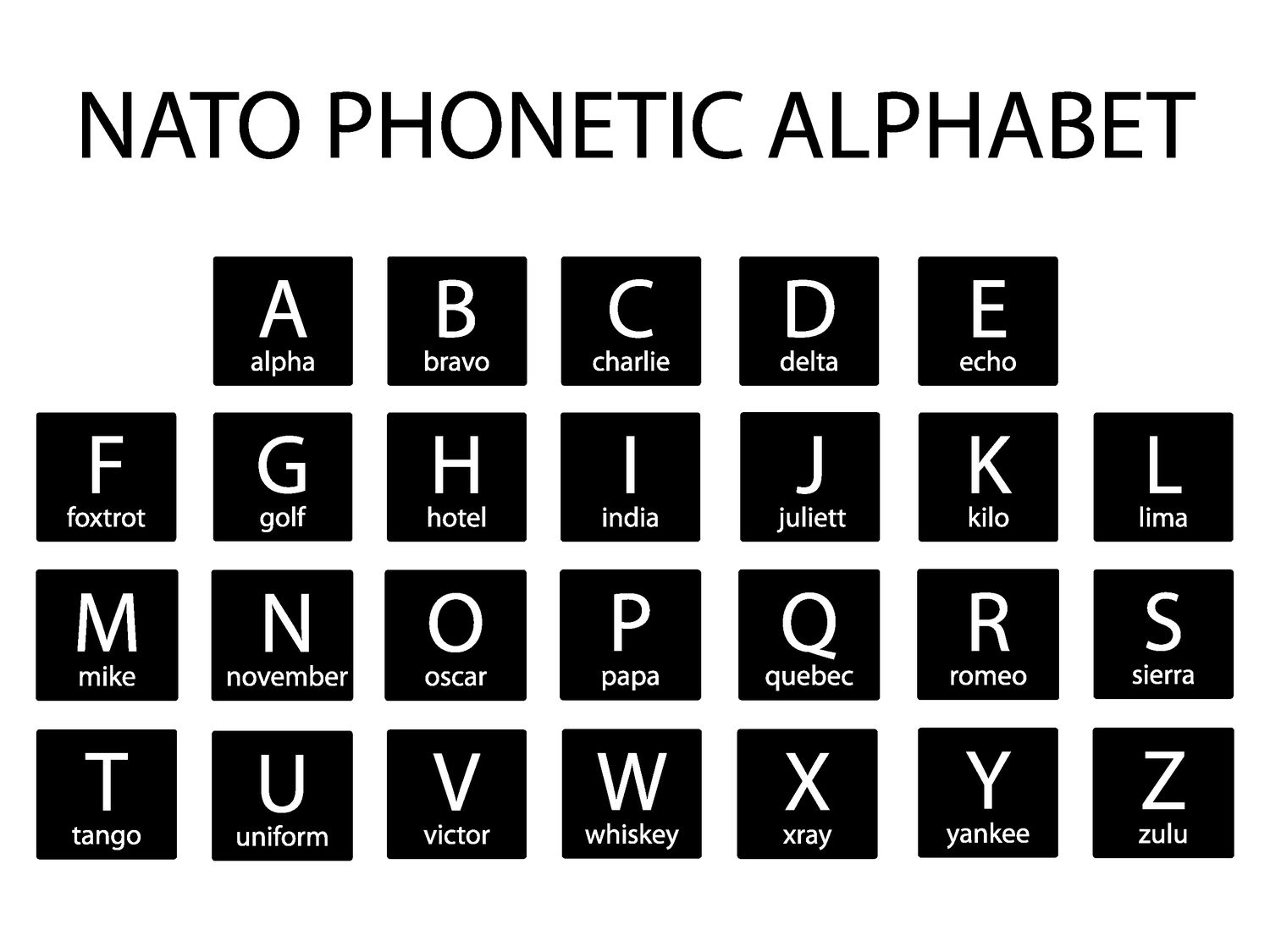
NATO Phonetic Alphabet Overview
| Letter | Code Word | Letter | Code Word | Letter | Code Word |
| A | Alfa | J | Juliett | S | Sierra |
| B | Bravo | K | Kilo | T | Tango |
| C | Charlie | L | Lima | U | Uniform |
| D | Delta | M | Mike | V | Victor |
| E | Echo | N | November | W | Whiskey |
| F | Foxtrot | O | Oscar | X | X-ray |
| G | Golf | P | Papa | Y | Yankee |
| H | Hotel | Q | Quebec | Z | Zulu |
| I | India | R | Romeo |
For a comprehensive guide to each code word and its proper usage, you can check out Pilot Institute’s detailed NATO Phonetic Alphabet Guide.
Build Your Story-Based Framework
- Choose a theme that interests you, adventure, romance, sports, or fantasy, to stay engaged and make practice enjoyable.
- Map each letter to a character or object that represents the code word, ensuring each has a clear role in your story.
- Link scenes sequentially so each event leads to the next, creating a chain where remembering one code word triggers the following one.
- Add vivid sensory details like colors, sounds, smells, and textures to make your mental imagery distinctive.
- Practice and refine your story until it flows smoothly. If a wizard crossing a river delta on a golf cart feels wrong, change it!
Step-by-Step Custom Story Creation
Let’s walk through creating the first part of a story using a fantasy adventure theme:
- Alfa: Start with an Alpha wolf as your main character. Picture a majestic silver wolf standing on a cliff.
- Bravo: The wolf receives a standing ovation (Bravo!) from forest creatures for its bravery.
- Charlie: Charlie, an old wizard with a long white beard, approaches the wolf with a scroll.
- Delta: The wolf and wizard must cross a wide river delta with sparkling blue waters.
- Echo: Their voices echo through a mysterious canyon as they call for a guide.
- Foxtrot: A fox performing a dance (foxtrot) appears, offering to lead them.
- Golf: They pass through an abandoned golf course with overgrown grass and rusty flags.
- Hotel: The group arrives at a towering magical hotel with floating rooms.
- In a cooking-themed story, you might start with:
- Alfa: Chef Alfa, wearing a tall white hat, enters the kitchen.
- Bravo: Guests shout “Bravo!” as appetizers are served.
- Charlie: Charlie, the sous chef, chops vegetables at high speed.
- Delta: Delta sauce (a special triangular-shaped sauce) is drizzled over the dish.
This approach helps you create memorable scenes that connect each code word in sequence.
Sample Narrative from Alfa to Zulu
The adventurer Alfa met a brave dog named Bravo at Charlie’s café near the Delta river. They heard an Echo in the distance where a Foxtrot was dancing on the Golf course of the luxury Hotel. In India, they met Juliett carrying a Kilo of gold toward Lima. There, Mike and his friend from November watched Oscar and his Papa drive through Quebec in search of Romeo, who was climbing the Sierra mountains. They performed a Tango wearing matching Uniform outfits before meeting Victor, who drank Whiskey and needed an X-ray after falling. Finally, they waved goodbye to Yankee and his zebra named Zulu.
This continuous story creates natural transitions between all 26 code words, making them easier to recall.
Alternative Themed Story Sequences
Breaking the alphabet into shorter scenes can make memorization easier:
- Sci-Fi Theme (A-F): Commander Alfa received a “Bravo” message from cyborg Charlie about a malfunction on the Delta station. Strange Echoes were coming from the Foxtrot quadrant.
- Mystery Theme (G-L): Detective Garcia found footprints on the Golf course leading to the Hotel where the suspect fled to India. Witness Juliett carried a Kilo of evidence to Lima for analysis.
- Adventure Theme (M-R): Mike and his team from the November expedition rescued Oscar and his Papa from quicksand in Quebec, while searching for the legendary Romeo artifact.
- Fantasy Theme (S-Z): The Sierra dragon guarded the castle where a magical Tango transformed anyone wearing the enchanted Uniform into heroes. Victor drank Whiskey from an ancient chalice, requiring an X-ray spell from the Yankee wizard and his Zulu familiar.
Visualize the Story to Lock It In
- Create mental movie scenes for each transition, seeing characters interact to cement the sequence in memory.
- Assign unique characteristics to each character or object (Bravo could be wearing a bright blue cape, Juliett might have fiery red hair).
- Build a mental journey through specific locations (Delta river, Hotel, Sierra mountains) you can “walk through” during recall.
- Sketch simple symbols on flashcards as visual triggers; even stick figures or basic icons that represent each code word can work.
Compare with Other Mnemonic Methods
Mnemonic Methods at a Glance
| Method | Description | Best For | Example Application |
| Story Narrative | Linked story from Alfa to Zulu | Full-alphabet recall | Adventure narrative connecting all 26 words |
| Chunking | Break into 5-6 word groups | Quick group drills | Group 1: A-F “All Brave Cats Dance Echoing Footsteps” |
| Musical Mnemonic | Sing code to a tune | Auditory learners | Set to “Twinkle Twinkle Little Star” or “Yankee Doodle” |
Practical Chunking Application
Chunking breaks information into meaningful groups. Apply this to the NATO phonetic alphabet by:
Logical Word Groups:
- “Alpha Bravo Charlie” (first three letters)
- “Delta Echo Foxtrot Golf” (geographical features)
- “Hotel India Juliett Kilo Lima” (travel-related terms)
- “Mike November Oscar Papa” (person names)
- “Quebec Romeo” (romantic pair)
- “Sierra Tango Uniform” (military-related)
- “Victor Whiskey X-ray Yankee Zulu” (closing sequence)
Categorical Chunks:
- Places: Delta, Hotel, India, Lima, Quebec, Sierra
- People: Charlie, Juliett, Mike, Oscar, Papa, Romeo, Victor, Yankee
- Actions: Echo, Foxtrot, Tango
- Things: Alfa, Bravo, Golf, Kilo, Uniform, Whiskey, X-ray, Zulu
- This method helps you recall words in logical groups rather than memorizing all 26 in order.
Musical Mnemonic Method
Set the phonetic alphabet to familiar tunes:
“Twinkle Twinkle Little Star”:
Al-fa, Bra-vo, Char-lie, Del-ta
E-cho, Fox-trot, Golf, Ho-tel
In-dia, Ju-liett, Ki-lo, Li-ma
Mike, No-vem-ber, Os-car too
“Yankee Doodle”:
Al-fa Bra-vo Char-lie Del-ta
E-cho Fox-trot Golf
Ho-tel In-dia Ju-liett Ki-lo
Li-ma Mike, and more!
The rhythm and melody provide additional memory cues, which is especially effective for auditory learners.
Common NATO Phonetic Alphabet Phrases
Beyond the basic alphabet, these shorthand codes are frequently used in professional communications:
- Charlie Mike: Continue Mission (keep going)
- Oscar Mike: On the Move (currently relocating)
- Lima Charlie: Loud and Clear (perfect radio reception)
- November Golf: No Go (mission aborted or not operational)
- Sierra Hotel: Exceptional performance (military aviation term)
- Whiskey Tango Foxtrot: Expresses confusion (WTF)
- Echo Tango Alpha: Estimated Time of Arrival (ETA)
Knowing these common phrases helps you understand communications in aviation, military, and emergency services.
Field-Tested Professional Mnemonics
Professional fields use powerful mnemonics beyond the NATO alphabet:
Aviation:
- GUMPS (pre-landing check): Gas, Undercarriage, Mixture, Propeller, Seatbelts
- IMSAFE (pilot readiness): Illness, Medication, Stress, Alcohol, Fatigue, Emotion
Military:
- SMEAC (five-paragraph order): Situation, Mission, Execution, Administration, Command/Signal
- BAMCIS (USMC planning): Begin planning, Arrange reconnaissance, Make reconnaissance, Complete planning, Issue order, Supervise
Emergency Services:
- ABCDE (trauma assessment): Airway, Breathing, Circulation, Disability, Exposure
- These real-world mnemonic systems show the practical value of memory techniques in critical situations.
Practice, Review, and Test Yourself
Use spaced repetition by reviewing your story at gradually increasing intervals (1 day, 3 days, 1 week) to move information from short-term to long-term memory. Create digital or paper flashcards showing either the letter or code word, testing recall in both directions. Quiz yourself in random order to ensure you have mastered individual words, not just the sequence.
Simple Review Schedule
| Day | Activity |
| Day 1 | Learn complete story twice |
| Day 3 | Quick run-through, focus on weak spots |
| Day 7 | Full test in sequence and random order |
| Day 14 | Final review with timed recall |
Common Pitfalls and Quick Fixes
- Forgetting mid-sequence – Add stronger action links between scenes. If you forget what comes after “Hotel,” have your characters get thrown out of the hotel and land in India.
- Bland mental images – If your mental pictures are dull, make them ridiculous. Don’t just picture an echo; picture a giant, visible ECHO bouncing off mountains and knocking birds out of the sky. The brain loves absurdity.
- Inconsistent practice – Set a calendar reminder or link practice to daily activities like brushing your teeth or waiting for coffee to brew.
With these adjustments, your NATO phonetic alphabet retention will improve.
FAQs
1. How do you memorize the NATO phonetic alphabet?
The best way is to create a vivid, sequential story that includes all 26 code words, practice it regularly with spaced repetition, and test yourself both in sequence and randomly.
2. What does “Tango Mike Bravo Zulu” mean?
This sequence combines common military shorthand: “Tango Mike” often stands for “Thanks Much,” while “Bravo Zulu” means “Well Done” or “Good Job” in naval communications.
3. What are the NATO mnemonics?
The NATO phonetic alphabet itself is a mnemonic system of 26 standardized code words: Alfa, Bravo, Charlie, Delta, Echo, etc. It was created for clear voice communications across international channels.
4. What is the best way to learn the phonetic alphabet?
The most effective approach combines story-based mnemonics with regular practice and visualization techniques, suited to your personal learning style (visual, auditory, or kinesthetic).
Wrap-Up and Next Steps
The key isn’t just knowing the alphabet; it’s building a machine in your own mind that produces the answer when you need it. The story system transforms disconnected words into a meaningful sequence your brain naturally wants to remember. Practice your story daily for just five minutes during the first week, then reduce to weekly refreshers. For a real test, try teaching your story to someone else. It’s the ultimate confirmation that you’ve truly mastered the system.
Ready to go further? Download a NATO Phonetic Alphabet PDF for offline study or challenge yourself with an online NATO Phonetic Alphabet quiz to track your progress and keep your recall sharp.