How Can I Remember the Order of the Planets? 10 Easy Mnemonics
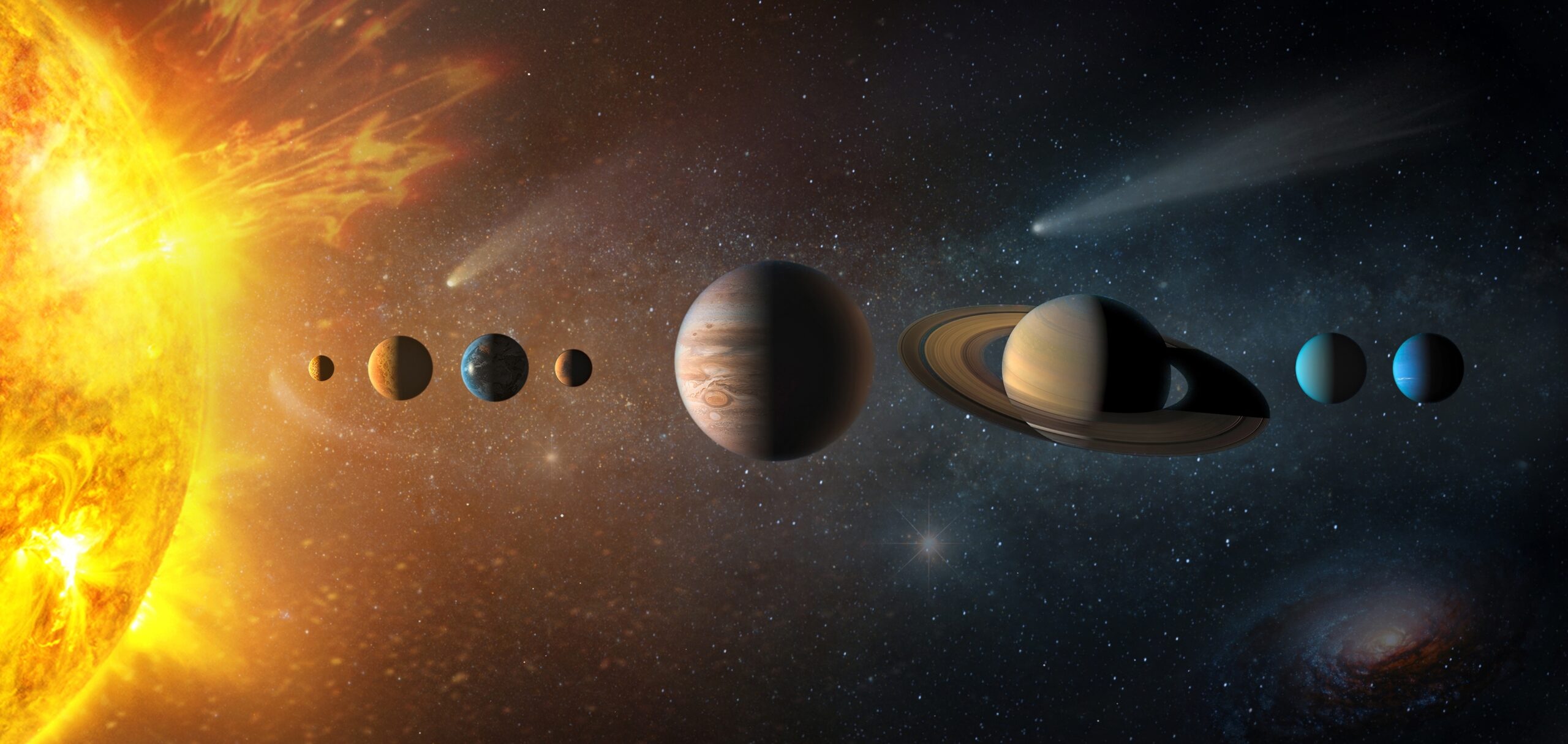
Recalling the order of our eight planets can challenge even the brightest minds. From Mercury’s scorching proximity to the Sun to Neptune’s frigid outer orbit, these celestial bodies follow a specific sequence that is fundamental knowledge for astronomy students and anyone curious about our solar neighborhood. For a deeper overview of different mnemonic strategies, see Wikipedia’s page on Planetary mnemonic.
Fortunately, mnemonics offer a powerful mental shortcut. These memory aids transform difficult information into simple, memorable phrases. They stick in your brain far better than just repeating names over and over. I’ve seen in my own classrooms how these simple tricks can light up a student’s understanding. Educators have relied on these techniques for decades because they work.
Why Only Eight Planets? The Pluto Story
I remember the cosmos having nine planets. Many of us do. If you studied astronomy before 2006, you learned about Pluto at the end of the line. That year, the International Astronomical Union (IAU) officially reclassified Pluto as a dwarf planet. While Pluto orbits the Sun and is nearly spherical, it does not meet the third criterion for planethood: it hasn’t “cleared the neighborhood” around its orbit, sharing its path with other Kuiper Belt objects. For further details about Pluto’s reclassification, visit the International Astronomical Union’s official page here.
This scientific update changed our solar system model from nine planets to eight, requiring adjustments to the mnemonics we use. Pre-2006 memory aids typically ended with “Pizza” or “Pies” for Pluto, while modern versions, as of 2025, conclude with “Nachos” or “Noodles” for Neptune.
| Mnemonic Technique | Description | Best For | Example |
| Classic Sentence | First letter matches each planet | General use | “My Very Educated Mother Just Served Us Nachos” |
| Concise Version | Shorter alternative with fewer syllables | Easy recall | “My Very Easy Method Just Speeds Up Naming” |
| Custom Mnemonic | Personalized to the learner | Strong personal connection | Create your own using familiar words |
| Finger Mapping | Using hands as visual/tactile guide | Kinesthetic learners | Map planets across both hands |
| Rhymes | Rhythmic patterns for easier recall | Auditory learners | “Little Mercury is closest to the sun…” |
| Color Association | Using colored objects in sequence | Visual learners | Arranging colored beads or objects |
| Songs | Setting planet names to familiar tunes | Musical learners | Planet names to “Twinkle, Twinkle, Little Star” |
| Personal Story | Linking planets to memories | Creating strong memory connections | Associating planets with people you know |
| Memory Palace | Spatial visualization technique | Visual-spatial thinkers | Placing planets along a familiar route |
| Teaching Others | Reinforcing through explanation | Verbal processors | Explaining the order to someone else |
10 Easy Mnemonics and Visual Techniques

1. Use the classic sentence “My Very Educated Mother Just Served Us Nachos”
This popular mnemonic offers instant recall by matching the first letter of each word to its corresponding planet in order from the Sun: Mercury, Venus, Earth, Mars, Jupiter, Saturn, Uranus, and Neptune.
Origin: While its exact creator remains undocumented, this mnemonic became widely used in educational materials during the mid-to-late 20th century. Following Pluto’s 2006 reclassification, astronomer Phyllis Lugger proposed the “Nachos” ending, which the IAU now uses in public education. It’s interesting how a single astronomical decision required us all to get a little more creative with our lunch orders.
Many variations exist, including “My Very Excellent Mother Just Served Us Noodles” or “My Very Earnest Mother Just Sent Us Nuts”. If you’re wondering how to remember the planets, “My Mother” sayings work especially well.
2. Try the concise version “My Very Easy Method Just Speeds Up Naming”
This shorter alternative follows the same pattern and uses fewer syllables. Many learners prefer this version because it flows more naturally. This is often called My Very Easy Method of remembering planets.
3. Create a custom mnemonic
Personalized mnemonics often stick better than generic ones. Follow these steps:
- Start with familiar words (your name, hometown, favorite food)
- Match each word’s first letter to a planet’s initial
- Test your creation, tweaking until it feels natural to recall
You can even make up funny ways to remember the planets, the sillier, the more memorable. Your own connection to the ideas is what matters most.
4. Visualize planets on your fingers
Map the solar system across your hands with Mercury at your left wrist, Venus on your pinkie, Earth on your ring finger, and continue across both hands to Neptune on your right pinkie. This tactile method reinforces spatial memory, making the planet order easy to recall anywhere.
Best for: Kinesthetic learners and young children who benefit from physical interaction.
5. Memorize with a rhyme
What is the rhyme for remembering the planets? Rhymes enhance memory through rhythm and pattern recognition:
Little Mercury is closest to the sun,
Then comes Venus, the second one.
Earth is third where humans dwell,
Mars comes fourth, as stories tell.
For even more playful verses, check out Parade’s collection of creative rhymes and chants for the planets.
Best for: Auditory learners and young children who respond well to rhythmic patterns.
6. Map planets to colored beads or objects
Create a visual representation by:
- Selecting items that roughly match each planet’s color (orange for Mercury, yellowish for Venus)
- Arranging objects by increasing or decreasing size
- Using everyday items like buttons, beads, or even different-sized fruits
Best for: Visual learners who process information better through images and color associations.
7. Sing a mnemonic song
Set the planets to a familiar tune like “Twinkle, Twinkle, Little Star”:
Mercury, Venus, Earth, and Mars,
These are planets, not the stars.
Jupiter and Saturn too,
Uranus, Neptune, complete the crew.
Best for: Auditory learners and younger students who benefit from musical patterns.
8. Link each planet to a personal story
Create vivid associations by connecting planets to personal memories. Perhaps Mercury reminds you of your quick-moving cousin Mercy, Venus connects to your friend Veronica, and Earth is where you live. These personal hooks create stronger memory connections than abstract facts alone.
9. Picture a mental journey (memory palace)
This powerful technique works by:
- Choosing a familiar route (your home, school path, or workplace)
- Placing each planet at specific landmarks along the way
- Mentally walking the route, “seeing” each planet in order
Best for: Visual learners with strong spatial memory capabilities.
10. Teach someone else the order
Explaining planetary order to a friend or family member reinforces your own understanding. This technique, known as the “protégé effect,” demonstrates that teaching others improves your mastery of the subject by forcing you to clearly articulate and organize the knowledge.
Quick-Reference Table of Top Mnemonics
| Planet | Mnemonic 1 | Mnemonic 2 | Mnemonic 3 |
| Mercury | My | My | My |
| Venus | Very | Very | Very |
| Earth | Educated | Easy | Excellent |
| Mars | Mother | Method | Mother |
| Jupiter | Just | Just | Just |
| Saturn | Served | Speeds | Served |
| Uranus | Us | Up | Us |
| Neptune | Nachos | Naming | Noodles |
Mnemonics for Other Celestial Objects
Asteroid Belt and Dwarf Planets
To include the Asteroid Belt (located between Mars and Jupiter) and the five recognized dwarf planets, you can try this expanded mnemonic:
“My Very Educated Mother Cannot Just Served Us Nachos – Heavy Metal Eating“
This represents Mercury, Venus, Earth, Mars, Ceres (dwarf planet in the Asteroid Belt), Jupiter, Saturn, Uranus, Neptune, and the outer dwarf planets: Pluto, Haumea, Makemake, Eris [4].
Planetary Mnemonics in Other Languages
Different languages have developed their own memorable phrases:
- Spanish: “Mi Viejo Tío Me Junta Suficientes Uvas Negras”
(My old uncle gives me enough black grapes) - French: “Mon Vieux Tu M’as Jeté Sur Une Nouvelle Planète”
(My old man, you’ve thrown me onto a new planet) - German: “Mein Vater Erklärt Mir Jeden Sonntag Unsere Neun Planeten”
(My father explains our nine planets to me every Sunday). Note that this is an older mnemonic from before Pluto’s reclassification. - Mandarin Chinese: Often uses rhyming songs with the first character of each planet’s name (水金地火木土天海).
What is the acronym for remembering the order of the planets?
MVEMJSUN is the acronym representing Mercury, Venus, Earth, Mars, Jupiter, Saturn, Uranus, and Neptune in order from the Sun. If you include Pluto, as older models do, the acronym becomes MVEMJSUNP (What is the acronym for remembering the order of the planets with Pluto).
Expert Insights & Trusted Sources
This guide draws from established educational resources including NASA’s planetary science materials and astronomy textbooks. The truth is, the best memory aids are the ones that make you smile, your brain tends to remember what amuses it. A little humor can go a long way in making a cosmic fact stick.
Additional authoritative resources include:
- Visit the NASA Official Website for comprehensive planetary science updates.
- Explore NASA’s social media hub and follow them on Instagram, Twitter, and YouTube for the latest news and discoveries.
- For more in-depth mission and exploration updates, check out the NASA Jet Propulsion Laboratory (JPL) Social Media Page.
Conclusion
The solar system’s order does not have to be complicated. Whether you prefer wordplay, visualization, or physical techniques, these mnemonic methods offer reliable pathways to remembering Mercury through Neptune. Choose one method that connects with your learning style, practice it occasionally, and you will have the planets’ sequence at your fingertips.
Frequently Asked Questions
1. What is the acronym for remembering the order of the planets?
MVEMJSUN is the acronym representing Mercury, Venus, Earth, Mars, Jupiter, Saturn, Uranus, and Neptune in order from the Sun.
2. What is the acronym for remembering the order of the planets with Pluto?
MVEMJSUNP is the acronym used to include Pluto at the end, as in the phrase “My Very Educated Mother Just Served Us Nine Pizzas.”
3. How to memorize the order of the planets?
Use a mnemonic phrase like “My Very Educated Mother Just Served Us Nachos,” create a visual representation, or try the finger method mapping planets across both hands.
4. What is the rhyme to remember the order of the planets?
A popular rhyme begins: “Little Mercury is closest to the sun, Then comes Venus, the second one…” continuing through all eight planets with simple rhyming patterns.
5. What is the planet order learning trick?
The most effective trick is creating a sentence where each word’s first letter matches the first letter of each planet in order from the Sun (M-V-E-M-J-S-U-N).
6. How to remember the planets My Mother?
Create or use a phrase like “My Very Educated Mother Just Served Us Nachos” and connect each initial to a planet. This “My Mother” approach is easy to customize for funny ways to remember the planets.